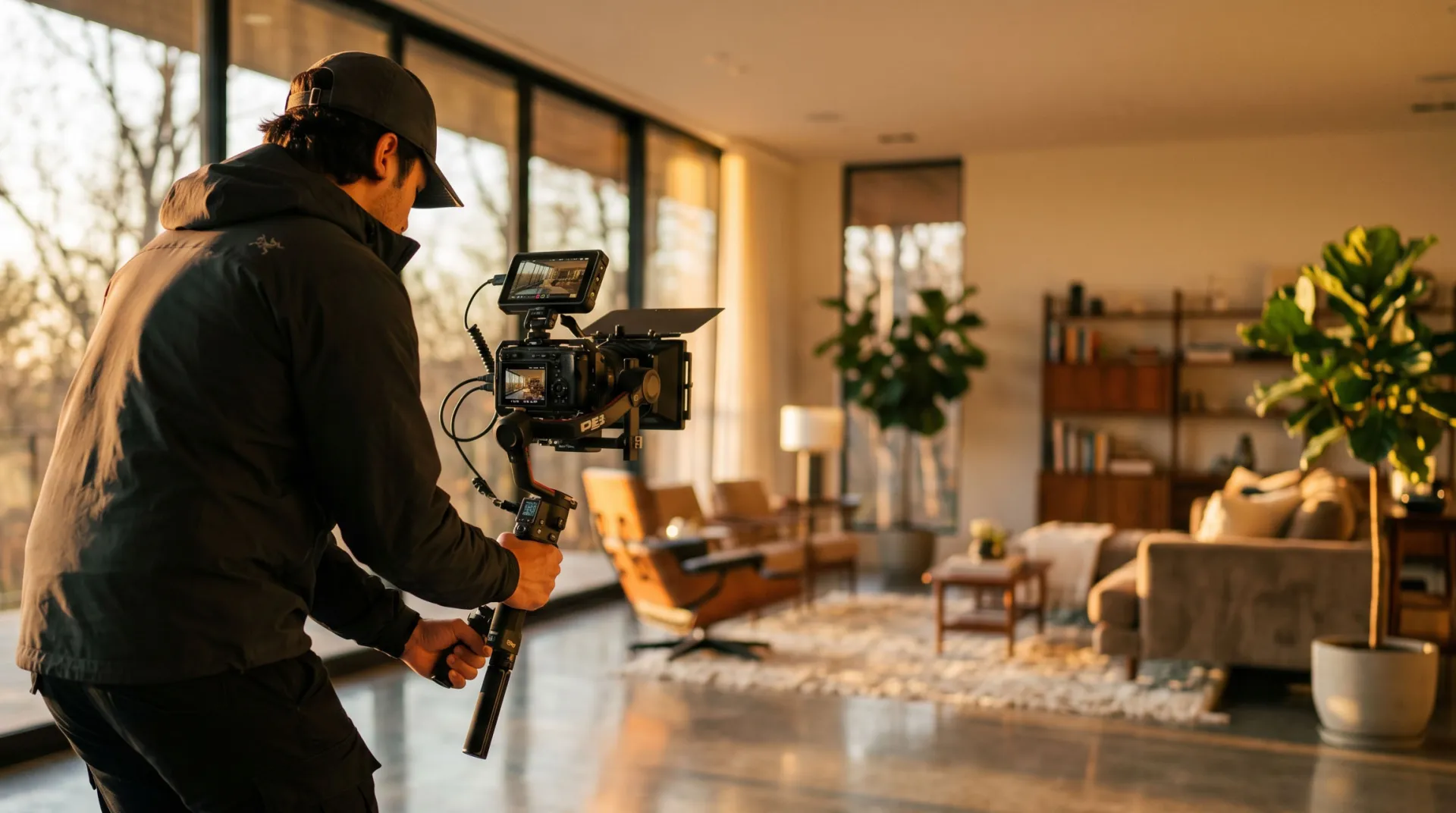
Real estate videography: what it costs and what to expect
Before the open home, before the floor plan, before a buyer has typed the suburb into a search filter, the
video is already playing. Buyers increasingly encounter property video as their first point of contact with
a listing, not photos, not descriptions. Real estate videography has shifted from a premium add-on to a
fundamental competitive tool, and the gap between a video that performs and one that merely exists on a
listing page is more significant than most agents account for. Where a basic property walkthrough video shows rooms, a cinematic production builds a narrative that shapes
how a buyer feels about a home before they ever walk through the front door. That distinction matters: it
affects first impressions, showing rates, and how buyers perceive value from the moment they hit play. This guide covers the full picture. You'll find the main video styles and what each one is built for, a
clear breakdown of what packages cost, the technical deliverables worth requesting, and the questions that
separate a professional videographer from one who just owns a camera. Buyer discovery now starts online, and video has become the leading format on the major platforms buyers
use. According to the National Association of Realtors, around 70% of home shoppers want to watch a video to
see inside a property before scheduling a visit, and 86% use video to research neighbourhoods and local
context. These figures reflect a consistent behavioural shift in competitive markets, not an aspirational
preference; see recent real estate video statistics for more detail. Buyers who engage with listing video
tend to spend more time with the property online and arrive at showings with a clearer sense of what they
want. Not every listing needs a cinematic production. A basic walkthrough covers MLS compliance for a mid-range
property in a fast-moving market where buyers will come regardless. The math changes with luxury
residential, developer pre-sales, or competitive metro listings, particularly any property sitting on market
and needing fresh momentum. When the price point is high, the buyer is discerning, or the listing needs to
work harder than the comparables, professional real estate video production stops being an expense and
starts being the strategy. Substandard video can actively harm a listing's first impression. Shaky footage, flat colour, blown-out
windows, and absent sound design don't just fail to impress, they can reduce a buyer's perceived value of
the property before they've seen it in person. Property marketing video tends to set an early price anchor
in a buyer's mind. Walk them through a poorly lit, carelessly edited tour and they may have already adjusted
their expectations downward before they've read the listing description. The most common format in real estate videography is a 1-2 minute room-by-room tour shot on a gimbal with
licensed background music and a basic edit. It covers the essentials well: MLS compliance, a quick visual
overview, fast turnaround, and a price point accessible to most budgets. Where it falls short is persuasion.
A standard walkthrough documents. It shows buyers that a kitchen exists and that the master bedroom has a
window. It rarely makes anyone feel anything, and that feeling is what drives a showing. This is where production quality creates a genuine competitive advantage. Cinematic real estate videography
applies techniques drawn from commercial filmmaking: motivated camera movement, controlled and supplemented
lighting, colour grading with clear intent, sound design, and an edit that builds toward a narrative arc
rather than simply panning from room to room. The result treats a property as a featured story rather than a
floor plan on screen. At 101 Studios, listing videos are built exactly this way. The approach makes luxury listings feel
aspirational and positions mid-range properties as premium, which is what justifies the spend. When buyers
describe feeling drawn to a listing before they fully understand why, they're responding to this kind of
production quality. That's craft, not coincidence. Aerial footage delivers what no ground-level shot can: scale, location context, neighbourhood appeal, and
architectural drama from above. For properties on large lots, waterfront sites, or homes where the
surrounding area is a genuine selling point, drone footage isn't decorative, it's essential context. The key
is integration. Aerial shots dropped into a property walkthrough video as a bolt-on feel disconnected. Woven
into a full edit with matching colour and pacing, they elevate the entire piece. Basic walkthrough packages typically run $150-$450, covering a 1-2 minute edit with licensed music and
standard gimbal shooting. Standard property video packages sit in the $400-$900 range, with pricing scaling
by square footage. As a reference point, providers commonly tier from around $395 for homes under 2,000
square feet up to $690 or more for larger properties. For a more detailed breakdown of industry pricing and
what to expect in each tier, consult this real estate videography pricing guide. These packages deliver what
most MLS-listed homes need: a clean, professional record of the space. The $900-$2,000+ tier is where the deliverables change materially. Additional spend at this level buys
drone aerials, twilight exterior shots, full colour grading, multiple social media cuts, longer runtime, and
agent-branded edits. This tier is the right call for luxury residential, developer off-the-plan campaigns,
or any property where the listing needs to do heavy lifting before buyers visit. For a two-bedroom apartment
in a standard market, it may be overspend. For a prestige home or a competitive development launch, it's the
floor, not the ceiling. A few line items consistently extend campaign performance beyond the core video asset: Frame each of these against your listing goal, not against a vague idea of what looks professional. The
question is always: what does this buyer need to see, and what converts a view into a showing? Shoot in 4K where your gear allows, it gives you future-proofed footage and the ability to reframe in post
without losing quality. Standard delivery for listing sites is 1080p (H.264, MP4), with 4K masters available
for high-resolution display contexts. A full-frame camera stabilised on a gimbal remains the production
baseline for professional property videography. Horizontal format is standard, with vertical cuts for social
media formatted and delivered separately. For practical recommendations on cameras, ideal settings, and
emerging AI tools that speed editing, see this guide to camera settings and AI tools. Turnaround for professional property video typically runs 24-48 hours for basic projects and 3-5 business
days for premium productions with colour grading, sound design, and multiple deliverable formats. The
post-production pipeline covers log footage processing, interior and exterior colour consistency grading,
licensed music selection and sync, and final export in branded and unbranded versions. If your listing has a
hard deadline tied to a campaign launch, confirm rush availability upfront, most professional studios can
accommodate it, usually at an additional fee. The full-length listing video is your hero asset. Short-form cuts of 15-60 seconds, formatted for Instagram
Reels and TikTok, are what turn a single shoot into a multi-channel campaign. These clips reach buyers who
would never find the full video through a listing portal but scroll past your content on social every day.
Ask whether social cuts are included in the quote or priced separately, the answer tells you a lot about how
a studio thinks about your campaign versus just your shoot. For practical production tips that help listing
videos perform across platforms, review these 12 must-dos that increase engagement and conversions. Review the videographer's full reel with specific criteria in mind: consistent colour work across different
lighting conditions, camera movement that feels motivated rather than mechanical, clean audio or purposeful
sound design, and an edit that builds a sense of place rather than just cataloguing rooms. A videographer
whose work looks identical regardless of property type is working from a template. That's fine for commodity
volume, it's not what you want when a listing needs to stand out. Before signing anything, get clear answers on the following: These aren't bureaucratic details, they define what you actually receive for the budget you've committed.
Contracts that are vague on these points tend to produce disputes after delivery, not before. Watch for these warning signs during the pre-hire conversation: no location scouting process, no pre-shoot
brief or shot list discussion, sample reels with flat audio or inconsistent editing, and no prior work on
properties in your price bracket. A professional real estate videographer worth hiring asks about your
listing goals, your target buyer, and your campaign timeline before sending a quote. If the first
conversation is entirely about price and availability, the production process is likely to match,
transactional, not strategic. Real estate videography is no longer optional for listings that need to compete on first impression. Buyer
expectations have shifted, the standard has moved with them, and the difference between a video that drives
engagement and one that simply fills a checkbox on a listing page shows up in how buyers respond to the
property. The right package, the right deliverables, and the right questions separate a campaign asset from a
forgettable clip. For agents and developers ready to move beyond basic documentation, 101 Studios applies a
cinematic, editorial approach to every production, consistently delivering assets that support premium
positioning and generate genuine buyer response. Use the framework in this guide to brief your next shoot properly. Know what to ask, know what to request
in your deliverables, and hold the standard your listing deserves. The buyers watching that video before
they've even booked a showing are already forming an opinion. Make sure it's the right one. 101 Studios makes every home exceptional. Cinematic photography, film, and drone that turns any Sydney listing into one buyers can't scroll past. Serving all of Sydney.Why listing video has become a non-negotiable marketing tool
The shift in how buyers discover properties
When professional video earns its investment
The cost of getting it wrong
The main styles of real estate video and what each one is built for
The standard walkthrough tour
Cinematic and editorial property video
Drone and aerial footage as part of a cohesive campaign
What real estate videography packages actually cost
Entry-level and standard packages
Premium and cinematic packages
Add-ons worth budgeting for
Real estate videography deliverables and technical specs
Video length, resolution, and file format standards
Turnaround time and what post-production actually involves
Social media cuts and how they extend the campaign
Questions to ask before you sign with a real estate videographer
How to assess portfolio and production style before committing
What's included, what costs extra, and who owns the footage
Red flags that signal a mismatch before the shoot
Make the investment count
Get a quote matched to your listing