
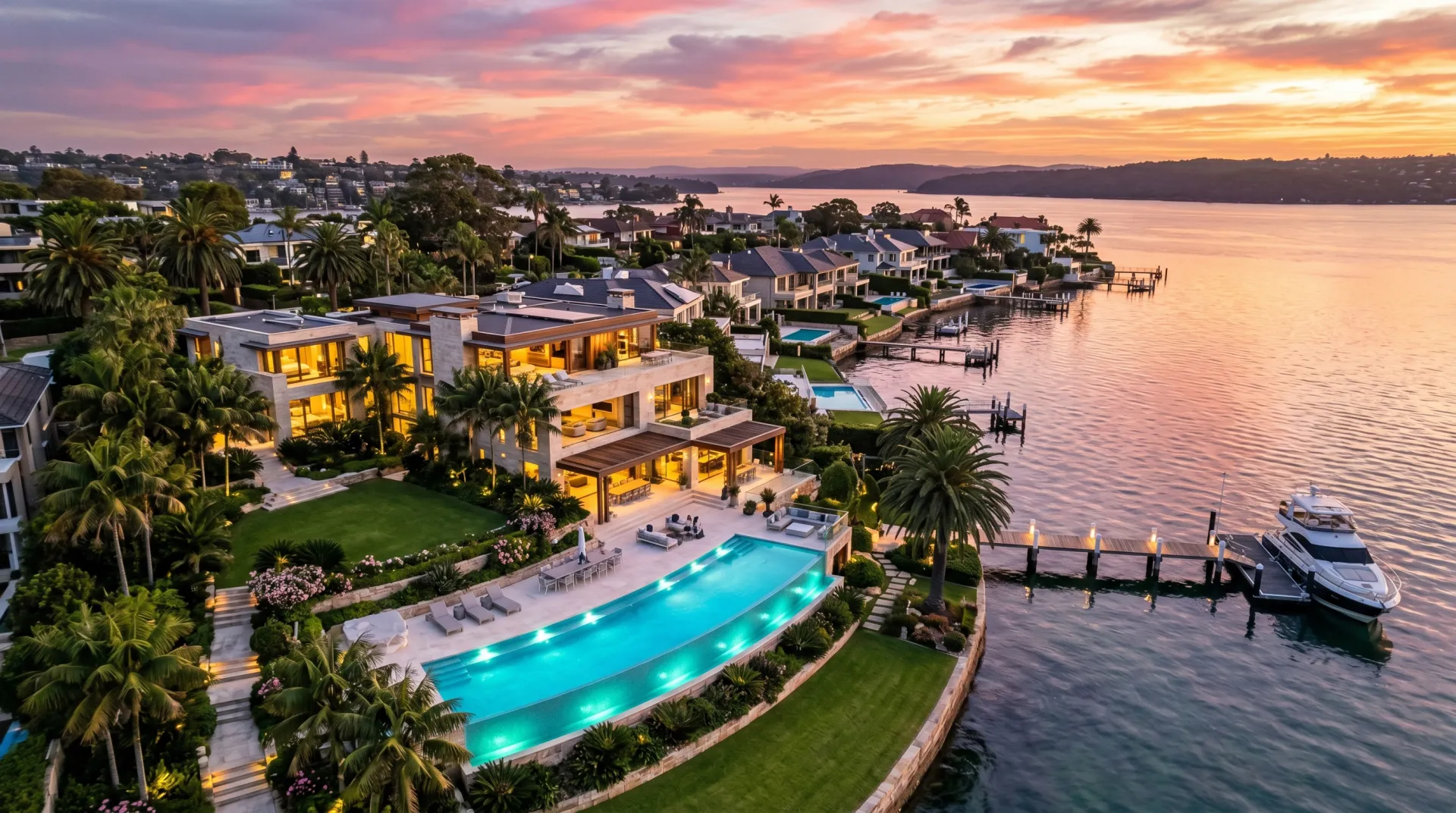
Premium Listing Strategy: How to Market Luxury Homes
A luxury buyer forms a first impression of a listing within seconds, and that impression is built entirely on visuals. If the photography doesn't stop them mid-scroll, the price point, the address, and the features never get read. The buyer moves on, and a $3M property sits on the market for months while the agent wonders what went wrong.
More often than not, the answer is marketing. A prestige property treated like a standard listing will feel like one, and buyers notice. A premium listing marketing strategy isn't about doing more things. It's about doing interconnected things with a shared creative vision, where editorial photography, cinematic video, 3D tours, drone aerials, and precision digital advertising each reinforce the others. At 101 Studios, our entire model is built around this principle: a single end-to-end creative pipeline where every asset shares the same mood, colour story, and narrative identity. That cohesion is what makes a campaign feel premium, and what ultimately justifies the number on the listing.
This guide walks you through how to build that system, from the first strategic decision to the final ad targeting call, covering every element of a premium listing marketing strategy that wins before buyers walk through the door.
What Premium Property Marketing Is Actually Asking Buyers to Feel
Luxury buyers aren't purchasing square footage. They're purchasing an identity, a lifestyle, and a set of feelings about their own success. The role of a premium marketing campaign is to communicate that aspiration before it communicates any specification. Bedroom count and land size can wait. The emotional pull comes first, and it has to arrive in the first visual frame.
Buyers self-select out of a listing within seconds if the creative doesn't match the price point. This isn't a conscious decision, it's a trust signal firing automatically. When a $4M home is presented with flat-lit, wide-angle snapshots, buyers perceive a mismatch between what they're seeing and what they're being asked to pay. The property doesn't feel overpriced because of the number. It feels overpriced because the marketing is signalling low care and low value.
The Gap Between Price Point and Perceived Value
Marketing creates perceived value. A prestige property photographed with editorial precision, cinematic video, and a cohesive visual identity is perceived as worth the asking price before a buyer has walked through the door. The same property shot with a standard real estate package reads as aspirational at best, overpriced at worst. According to a Redfin study, professionally photographed homes sell up to 32% faster and attract 118% more online views than listings without professional imagery. At the luxury end of the market, that gap can translate directly into weeks on market and hundreds of thousands of dollars.
Why a Piecemeal Approach Undermines High-End Listings
When photography, video, and social content are produced by different vendors with no shared brief, the result is visual inconsistency. The hero image has warm golden tones. The walkthrough video looks flat and corporate. The Instagram reel was edited by someone who never saw the photography. Buyers feel this disconnect even when they can't articulate it. The campaign signals fragmentation, and fragmentation signals a lack of care. For a prestige buyer, that's enough to keep scrolling.
Professional Photography as the Anchor of Your Premium Listing Marketing Strategy
Everything else in a premium listing campaign depends on the hero images. If the photography doesn't stop the scroll, no buyer will meaningfully engage with the video, explore the 3D tour, or click through to the microsite. Editorial photography is not simply "better" real estate photography, it's a fundamentally different discipline. The goal isn't documentation. It's art direction. For an overview of how imagery drives engagement and perception in property marketing, see the power of images in real estate.
What separates editorial photography from standard listing photos comes down to four things: staging alignment, natural light mastery, composition that guides the eye, and post-production colour grading that creates a consistent mood across every frame. Luxury print campaigns have operated this way for decades. Real estate marketing has been slow to apply the same standards, which means agents who do it well stand out dramatically in portal search results.
What Editorial Photography Actually Looks Like in Practice
A standard listing shot goes wide, gets everything in frame, and moves to the next room. An editorial approach selects a frame with intention: depth, selective focus on architectural details, a relationship between light and shadow that makes the room feel alive. The colour story running through every image creates a mood. A buyer scrolling through those images doesn't just see rooms, they feel a version of themselves living there. That emotional response is the entire point.
How the Photography Brief Sets the Visual Language for the Whole Campaign
The photographer's style, palette, and mood choices become the visual grammar that every other asset must follow. The cinematic video should match the photography's colour grade. The Instagram reels should carry the same warmth or coolness. The portal listing hero image should feel like it belongs to the same creative universe as the microsite banner. Establish the photography first, lock the visual language, and every other asset has a clear brief to work from.
Cinematic Video and Short-Form Reels That Sell the Lifestyle
A standard walkthrough video documents rooms. A cinematic video tells a story. There's a morning in the kitchen with light cutting through the window. An evening on the terrace with the city blurring in the distance. A Sunday in the garden. The narrative arc carries the viewer through the property the way a screenplay carries an audience through a scene, creating emotional investment before a showing is ever booked. According to the National Association of Realtors, listings with video receive 403% more inquiries than those without, and for properties above $2 million, video has become an increasingly expected element for serious buyers. For a deeper look at why video accelerates luxury sales, read why video sells luxury real estate faster.
Long-Form Showcase Video: What Makes It Cinematic
Production elements matter: a narrative arc, carefully selected music, camera movement through space that feels intentional rather than mechanical, twilight exteriors that give the property drama, and lifestyle moments that let the buyer project themselves into the frame. The goal is for a viewer to feel something, not just to see the property, but to want it. Colour grading in post-production ties the visual identity to the photography, ensuring the campaign feels unified across every platform where buyers encounter it.
Short-Form Reels: The Social Media Asset That Drives Top-of-Funnel Traffic
A 15-to-30-second vertical edit cut from the cinematic shoot serves a different purpose than the long-form showcase. It's not closing a buyer. It's introducing a property to a cold audience on Instagram or TikTok, stopping the scroll, and driving traffic to the portal listing or microsite where the full campaign lives. These reels work hardest when they lead with the property's most arresting visual, cut quickly, and end with a clear call to action. They're built from the same footage as the long-form video, which is why the cinematic shoot needs to be planned for both formats from the start.
3D Virtual Tours and Drone Aerials That Qualify Buyers Before the Showing
The two assets that work hardest to filter unqualified leads and attract serious remote buyers are immersive 3D walkthroughs and aerial drone footage. Both communicate things that standard photography physically cannot, and both are particularly powerful for buyers considering a luxury purchase from another city or country.
Research from Matterport and comparable platform studies suggests that 3D virtual tours can reduce days on market by 18, 31% in comparable listings, largely because buyers arrive at showings already emotionally invested. They've spent time exploring the property. They know the flow of the rooms, the relationship between indoor and outdoor spaces, and whether the property fits their lifestyle. The showing becomes a confirmation rather than a discovery, and buyers who've completed a virtual tour report significantly higher intent to make an offer. Recent industry data shows how 3D virtual tours can reduce time on market and increase sale prices, while academic analysis provides evidence from 75,000 home sales supporting the value of virtual tours.
How a 3D Virtual Tour Changes the Quality of Buyer Inquiries
When a buyer contacts an agent after completing a virtual tour, they're not at the start of their decision journey. They've self-selected through an immersive experience and decided the property is worth their time. That shift in inquiry quality changes the entire showing dynamic. Agents spend less time on speculative showings and more time with buyers who are genuinely close to a decision. For luxury properties where minimising disruption to current occupants matters, this is a significant operational benefit alongside the marketing one.
What Aerial Footage Communicates That No Other Asset Can
Drone aerials reveal the property's relationship to its environment: block size, privacy, surrounding architecture, coastal proximity, city views, and neighbourhood character. Ground-level photography, no matter how skilled, cannot show a buyer that the property sits on a private half-acre in a tree-lined street, or that the rooftop terrace looks out over water. For luxury buyers making decisions from a distance, aerial footage is frequently the asset that moves them from consideration to serious interest.
Reaching High-Net-Worth Buyers with Precision Digital Advertising
High-quality creative assets without a targeting strategy are money spent on the wrong eyeballs. The distribution plan is as important as the content itself, and for luxury real estate, precision always beats volume. You're not trying to reach everyone, you're trying to reach a small, specific group of people with the financial capacity and lifestyle alignment to seriously consider a $3M+ property.
Meta (Instagram and Facebook) is the dominant platform for luxury real estate visual content. Instagram functions as a visual discovery channel for affluent buyers, and the platform's targeting capabilities allow for postcode-level geotargeting combined with interest layering across luxury travel, fine art, private aviation, and premium automotive. Google Search captures high-intent buyers actively searching for luxury listings, while LinkedIn reaches business owners and executives who represent a significant share of the high-net-worth buyer demographic. Each platform serves a different stage of the buyer journey, and a well-structured premium listing marketing strategy deploys all three in a coordinated sequence. For practical tactics on targeting high-net-worth clients, this guide offers useful, platform-specific recommendations.
Targeting Tactics That Reach the Right Buyer Without Wasting Budget
Layered targeting is the standard for prestige property promotion. Start with location, targeting affluent postcodes and neighbourhoods. Layer in demographics using income proxies, age ranges (typically 35, 65 for luxury buyers), and household wealth indicators. Add interest categories: luxury lifestyle, fine dining, international travel, premium brands. Then build lookalike audiences from your existing client CRM and past buyer lists. The combination of these layers creates an audience that is small, precise, and far more likely to convert than broad demographic targeting, with industry data consistently showing significant cost-per-lead improvements over untargeted campaigns on the same platforms.
Why Visual Cohesion Is the Real Competitive Advantage in Luxury Listing Marketing
Individual assets matter. But what separates a campaign that commands premium pricing from one that doesn't is cohesion. Every photo, video frame, reel, and portal listing image must feel like it came from the same creative vision. When a buyer moves from a social reel to the portal listing to the microsite, the visual experience should be seamless. The same warmth in the photography should carry through the video's colour grade, which should match the social content, which should align with the portal hero image. The buyer encounters a consistent, premium brand at every touchpoint, and that consistency builds trust before any conversation with an agent begins.
What Cohesion Actually Looks Like Across a Full Campaign
A well-executed premium listing marketing strategy has a colour story that is established in the photography brief and maintained through every post-production decision. The golden tones of a late-afternoon shoot carry into the video grade. The mood of the hero image is the mood of the reel thumbnail. When a buyer sees the portal listing after encountering the brand on Instagram, the recognition is immediate: this is a premium property, represented by people who care about details. That recognition is a trust signal, and trust signals sell luxury homes.
How to Evaluate Whether Your Current Creative Pipeline Delivers Cohesion
Pull up your last three listings. Look at the hero photography, the video thumbnail, and the social posts side by side. Do they look like they came from the same campaign? Do they share a colour palette, a mood, a visual language? If they look like they were produced by three different vendors with three different briefs, the pipeline is the problem, not the individual assets. This is the gap that a full-service studio addresses: a single creative team covering strategy, production, and post-production means every deliverable is built to the same brief, with the same visual identity, from the first shoot day to the final export.
The Premium Listing Marketing Strategy That Wins Before Buyers Walk Through the Door
A premium listing marketing strategy is a coordinated system, not a vendor checklist. Editorial photography anchors the visual language. Cinematic video tells the lifestyle story. Short-form reels drive top-of-funnel discovery. 3D tours qualify buyers before they reach out. Drone aerials communicate scale and context. Precision digital advertising places every asset in front of the right audience at the right stage of their decision journey. Each element serves a distinct role, and the power of each multiplies when they're built together with a shared creative vision.
Agents who treat marketing as a coordinated campaign tend to attract more qualified buyers, spend fewer days on market, and achieve prices that more accurately reflect the value of prestige property. The listings that sell fastest and for the most money are rarely an accident. They're the result of a premium listing strategy that starts with a clear visual identity and ends with a buyer who was already convinced before they ever walked through the door.
If you're ready to build that system for your next luxury listing, 101 Studios offers the end-to-end creative pipeline your campaign deserves: editorial photography, cinematic video production, drone aerials, 3D virtual tours, social content, and full post-production, all built to a single brief. Book a campaign consultation and let's build a campaign your listing deserves.
Get a quote matched to your listing
101 Studios makes every home exceptional. Cinematic photography, film, and drone that turns any Sydney listing into one buyers can't scroll past. Serving all of Sydney.
Book 101 Studios